
Physics Careers
CANADIAN ASSOCIATION OF PHYSICISTS
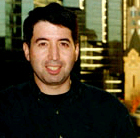
1999 Winner of AIP Prize for Science - writing in Physics and Astronomy for the non-specialist in the category of broadcast media for his documentary "From Empedocles to Einstein", which aired on the CBC radio program "Ideas".
1999 Winner of Science in Society Journalism award, radio category, from the U.S. National Association of Science Writers, for his documentary "Visions of the Apocalypse", which aired on the CBC radio program "Ideas".
I’m an award-winning freelance science journalist, broadcaster, and author with a broad interest in the physical sciences. I’ve written three popular science books (the most recent is The Science of Shakespeare), and in 2011-12 I was a Knight Science Journalism Fellowship at MIT.

B.Sc. from Dalhousie University, 1989

Bachelor of Applied Arts (graduate journalism program), Ryerson Polytechnic University, 1992; MA (History and Philosophy of Science), University of Toronto, 2014.

About six months after graduating from Ryerson with my journalism degree, I landed a part-time job as an editorial assistant in the national newsroom of CBC Television in Toronto. After about eight months, they promoted me to writer/editor, and I stayed at the CBC for another four years. I occasionally covered science news, but it was essentially the "news of the day."

I've been a full-time freelance science writer since leaving the CBC. I write science articles for newspapers, magazines, and websites; I'm also a regular contributor to the CBC Radio programs "Ideas" and "Quirks and Quarks," and I’ve written three popular science books.

My career is probably quite different from most other physics graduates. These days, I never have to solve differential equations or work out derivatives or integrals. As a science journalist, however, I do have to keep up with advances in physics and astronomy. I sometimes attend scientific meetings -- for example, meetings of the American Physical Society, American Astronomical Society, or the American Association for the Advancement of Science -- and have the privilege of having a front row seat to breakthroughs in physics and astronomy., Although I rarely use specific things that I learned in my physics classes, my experience at Dalhousie’s physics department was still extremely useful for my current work. Most importantly, it gave me insight into what the scientific process is all about. My interacting with my professors, and with my fellow students, I learned how scientists think; what sort of questions they ask; what drives them.
All of these things form the essential starting point for the work of any science writer.
How to contact me? dan@danfalk.ca